Claim Your Free Estimate Today
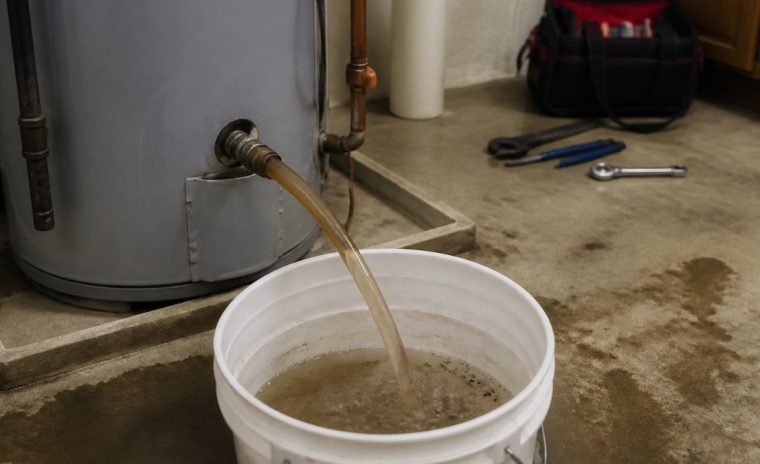
Table of Contents
- Signs of Sediment in Water Heater
- Why Your Water Heater Needs Flushing
- How Often to Flush a Water Heater
- How to Flush a Water Heater: Step-by-Step
- Water Heater Flushing Cost and When to Call a Professional
- Common Mistakes to Avoid When Flushing
- What to Do When Flushing Doesn’t Solve the Problem
- Frequently Asked Questions
Last Updated: October 4, 2026
Signs of Sediment in Water Heater
Your water heater needs flushing when sediment builds up inside the tank. Sediment is mineral deposits that accumulate over time, especially in areas with hard water. These deposits create problems that affect how well your heater works and how long it lasts.
The good news: sediment buildup shows clear warning signs. Learning to spot them early means you can act before serious damage occurs.
Popping, Rumbling, and Banging Noises
Unusual noises from your water heater are one of the earliest signs that sediment has accumulated. When sediment layers at the bottom of the tank, water gets trapped underneath. Heat causes that trapped water to turn to steam, which creates popping and rumbling sounds as it escapes through the sediment layer.
These noises typically happen when your heater is actively heating water. You might hear them in the morning or after the tank has been sitting unused for several hours. The sounds can range from gentle popping to loud banging that you hear throughout your home.
Banging noises are especially important to notice. They signal that sediment buildup has reached a point where your water heater needs flushing soon. Ignoring these sounds can lead to cracks in the tank or damage to the heating element.
Pro Tip
If noises started recently and weren’t there before, sediment is almost certainly the cause. This is one of the most reliable early warning signs that flushing is needed.
If noises started recently and weren’t there before, sediment is almost certainly the cause. This is one of the most reliable early warning signs that flushing is needed.
Reduced Hot Water Output
A drop in how much hot water your heater produces is a clear sign that sediment is interfering with performance. Sediment takes up space inside the tank, which means less room for heated water. Your shower might run lukewarm faster than it used to, or you might run out of hot water before finishing your laundry.
This problem gets worse over time. As more sediment accumulates, your heater has to work harder to heat less water. The heating element or burner has to operate longer to reach the same temperature.
Pay attention to changes in how long your hot water lasts. If you’ve had the same heater for several years and suddenly notice shorter hot-water cycles, sediment buildup is likely the cause.
Rusty or Cloudy Hot Water
Sediment can make your hot water look discolored or cloudy. You might notice a rusty tint, brown particles, or a general cloudiness when you fill a glass from the hot tap. This happens because sediment particles are being stirred up and carried through your pipes.
Cloudy water is different from the occasional air bubble that clears quickly. Sediment-caused cloudiness persists and may have a slight odor. If you see this in hot water but not cold water, your water heater needs flushing.
Watch Out
Rusty water from a water heater can stain laundry and dishes. More importantly, it signals that corrosion is happening inside the tank. The longer you wait to flush, the more damage occurs.
Rusty water from a water heater can stain laundry and dishes. More importantly, it signals that corrosion is happening inside the tank. The longer you wait to flush, the more damage occurs.
Why Your Water Heater Needs Flushing
Sediment accumulation is inevitable in tank-style water heaters. Minerals in your water, calcium, magnesium, and other compounds, settle to the bottom as water heats. Over months and years, these deposits build into a thick layer.
This buildup causes several problems. It reduces the efficiency of your heating element or burner. It creates those strange noises as steam escapes through the sediment layer. It takes up space that should hold heated water. Most importantly, sediment traps heat and moisture against the tank’s bottom, which accelerates corrosion and can eventually cause leaks.
Flushing removes this sediment and restores your water heater to better working condition. The process is straightforward and costs far less than replacing a failed heater or dealing with water damage from a leak.
At Acclaimed Drain And Plumbing Solutions, LLC, we recommend flushing as part of regular water heater maintenance.
How Often to Flush a Water Heater
Most homeowners should flush their water heater once per year. This frequency works well for homes with average water hardness and typical usage patterns.
If you have hard water, consider flushing every six months. Hard water contains more minerals, so sediment builds up faster. You’ll notice the warning signs sooner, and more frequent flushing prevents serious problems.
Some situations call for less frequent flushing:
- Newer heaters in areas with soft water can often go 18 months between flushes
- If you’ve installed a water softener, flushing once yearly is usually sufficient
- Electric water heaters sometimes need less frequent flushing than gas models, depending on your water quality
The best approach is to watch for the warning signs mentioned earlier. If you hear noises or notice reduced hot water output, that’s your signal to flush, regardless of when you last did it. Don’t wait for the calendar; let your heater’s performance guide your maintenance schedule.
How to Flush a Water Heater: Step-by-Step
Flushing a water heater is a task many homeowners can handle themselves. The process takes one to two hours and requires basic tools. However, if you’re uncomfortable working with water systems or your heater is in a tight space, professional help is always an option.
Regularly clearing out these mineral deposits remains the most effective way to maintain efficiency, though implementing proactive measures to stop water heater scale can significantly reduce the frequency of these maintenance tasks.
What You’ll Need Before Starting
Gather these items before you begin:
- Adjustable wrench or pliers
- Garden hose (long enough to reach a drain or outdoor area)
- Bucket (for catching initial water discharge)
- Towels or rags
- Gloves (the water will be hot)
- Safety glasses
Check that your garden hose is in good condition and doesn’t have leaks. Make sure you have a safe place to drain water, outside is best, but a floor drain works if you’re in a basement.
The Flushing Process
Step 1: Turn off power or gas supply [Time: 2 minutes]
For electric heaters, switch off the breaker.
Step 2: Turn off the cold-water inlet valve [Time: 1 minute]
Find the shutoff valve on the cold-water line entering the top of your heater. Turn it clockwise until it stops.
Step 3: Let the heater cool [Time: 30 minutes to 2 hours]
Hot water is dangerous. Waiting allows the tank to cool enough to work safely.
Step 4: Attach the garden hose [Time: 3 minutes]
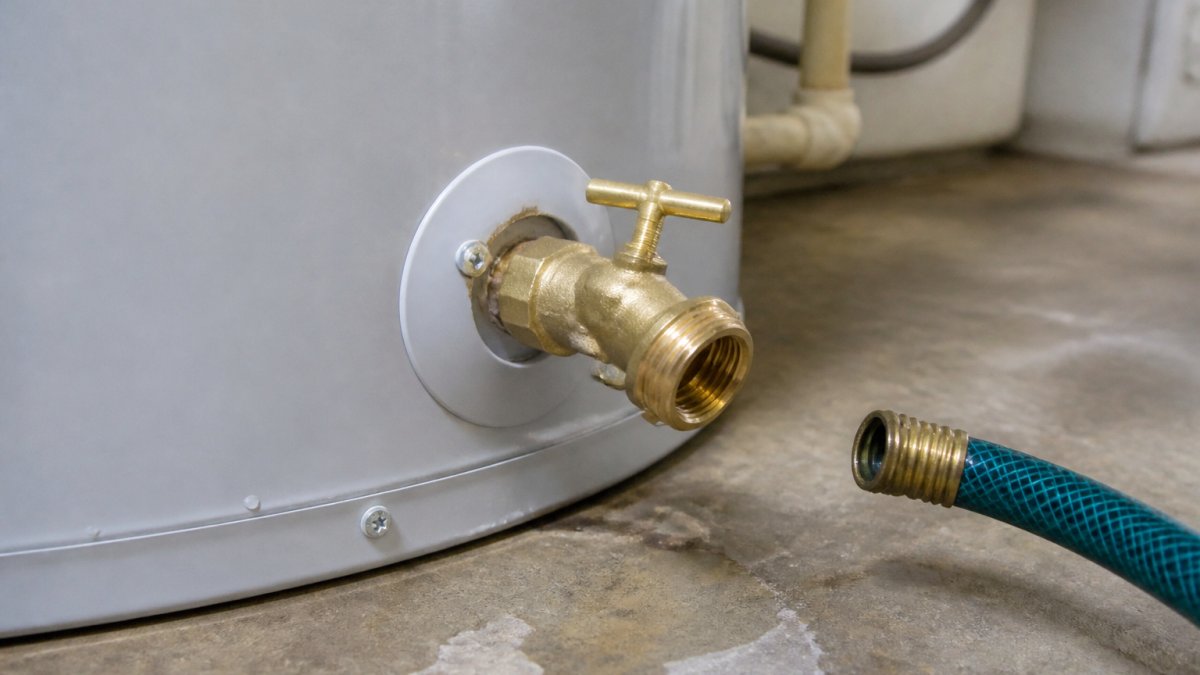
Connect your garden hose to the drain valve at the bottom of the tank.
Claim Your Free Estimate Today →
Step 5: Open the drain valve [Time: 1 minute]
Turn the drain valve handle counterclockwise. Water will begin flowing out. Start slowly to avoid splashing.
Step 6: Let it drain completely [Time: 20-40 minutes]
Keep the valve open and allow the tank to empty fully. The flow will slow as pressure decreases.
Step 7: Flush the tank [Time: 10-15 minutes]
Close the drain valve. Turn the cold-water inlet valve back on for 30 seconds, then close it again.
Verification and Refilling
Once the water runs clear, close the drain valve and disconnect the garden hose. Turn the cold-water inlet valve fully open. This allows fresh water to refill the tank.
Turn the power or gas supply back on. Listen for the heating element or burner to activate. Check around the base of the tank for any leaks. It’s normal for a few drops to appear around the drain valve; this usually stops within a few minutes as pressure equalizes.
Run hot water from a nearby tap for a minute or two. The water should be clear and flow normally. You may see some air bubbles initially, this is normal and clears quickly.
Key Takeaway
A successful flush leaves your heater quieter, your hot water clearer, and your tank working more efficiently. You should notice improvements within the first few days.
A successful flush leaves your heater quieter, your hot water clearer, and your tank working more efficiently. You should notice improvements within the first few days.
Water Heater Flushing Cost and When to Call a Professional
Flushing a water heater yourself costs almost nothing beyond the time it takes. You likely already own or can borrow the tools needed. The only expense is water, which is minimal.
Professional flushing costs vary. If you’re unsure about your ability to do it safely, or if your heater is in a difficult location, professional service is worth the investment. A licensed plumber can also inspect your heater for other issues while they’re there.
Call a professional immediately if:
- Your heater is leaking
- You smell gas near the heater
- The drain valve is stuck or broken
- You’re uncomfortable working with the shutoff valves
- Your heater is very old and you want expert assessment
At Acclaimed Drain And Plumbing Solutions, LLC, we offer professional water heater flushing and inspection. We provide upfront pricing and explain what we find so you can make informed decisions about your heater’s future.
Common Mistakes to Avoid When Flushing
Many homeowners make small errors that reduce the effectiveness of flushing or create safety problems.
Mistake 1: Skipping the cooling period. Hot water causes serious burns. Don’t rush this step. The extra 30 minutes of waiting prevents injury.
Mistake 2: Not flushing multiple times. One drain cycle rarely removes all sediment. Repeat the flush-and-drain process at least twice.
Mistake 4: Using the wrong size hose connection. Check your drain valve’s thread size before buying a hose.
Mistake 5: Leaving the power or gas on. This is dangerous. Always turn off the energy supply before opening the drain valve.
Mistake 6: Ignoring small leaks around the drain valve. A slow drip after flushing usually stops on its own as pressure settles.
What to Do When Flushing Doesn’t Solve the Problem
Sometimes flushing improves performance but doesn’t completely solve the problem. This happens when sediment buildup is severe or when other issues are present.
If you still hear noises after flushing, sediment may have caused permanent damage to the heating element or burner.
These situations call for professional evaluation. A licensed plumber can test your heater’s heating element, check for corrosion, and determine whether flushing again or replacement makes more sense.
Hard water that continues to cause problems even after regular flushing suggests you need a water softener. This device removes minerals before they reach your heater, preventing future sediment buildup.
Age matters too. If your heater is more than 10 years old and shows multiple problems, replacement may be more cost-effective than repeated repairs.
Watch Out
Older heaters that show rust-colored water or persistent leaks after flushing are at serious risk of tank failure. Water damage from a burst tank can be costly. Don’t delay in getting professional assessment if your heater is aging and showing these signs.
Older heaters that show rust-colored water or persistent leaks after flushing are at serious risk of tank failure. Water damage from a burst tank can be costly. Don’t delay in getting professional assessment if your heater is aging and showing these signs.
Knowing how to tell if your water heater needs flushing puts you in control of your home’s hot water system.
Frequently Asked Questions
What are the signs that a water heater needs flushing?
The most common signs include popping or rumbling noises coming from the tank, reduced hot water output or longer heating times, and rusty or cloudy hot water coming from your faucets. These symptoms typically indicate sediment and mineral deposits have accumulated inside the tank. Hard water conditions accelerate this buildup. If you notice any combination of these signs, your water heater tank likely needs flushing to restore heating performance and hot-water supply.
How often should you flush a water heater?
Most manufacturers recommend flushing a tank-style water heater annually as part of routine maintenance. However, if you have hard water or live in an area with high mineral content, you may need to flush every six months. Check your manufacturer’s recommendations and consider your local water quality. Regular flushing prevents excessive sediment buildup, extends the lifespan of your heating element or burner, and maintains consistent water temperature and heating performance.
Can you flush a water heater yourself?
Yes, many homeowners can flush a water heater themselves if they follow proper safety procedures. You’ll need a garden hose, bucket, and basic tools. The process involves shutting off power or fuel supply, turning off the cold-water inlet valve, and draining the tank through the drain valve. However, if you’re uncomfortable working with your water heater, have an older unit, or suspect corrosion or leaks, it’s safer to hire a professional. Professional service ensures the job is done correctly and safely.
What does it cost to flush a water heater?
The cost of professional water heater flushing depends on several factors, including your location, tank size, the condition of your water heater, and whether additional repairs are needed. Rather than guessing at pricing, contact a licensed plumber in your area for a free estimate. Investing in regular flushing is typically far less expensive than replacing a water heater prematurely due to sediment damage.